Thinking
February 27, 2026
Read time:
3 Minutes

Your blended ROAS looks great. Your profit doesn't match. Here's why.
You're running campaigns based on account-level metrics without knowing which individual products are actually profitable.
Your bestseller might be breaking even while a product you ignore could be your golden ticket.
There are two specific things brands miss when tracking product economics. Fix these, and you'll know exactly which products to scale and which ones are burning your budget.
1. You're Not Testing Your Pricing
Brands guess at pricing or copy competitors. Then wonder why ads don't convert.
There is a pricing framework based on four questions you ask yourself:
Point 1 - What price is so cheap you wouldn't trust it?
Point 2 - What price feels like a great deal?
Point 3 - What price is expensive but you'd still buy?
Point 4 - What price is so high you'd never buy it?
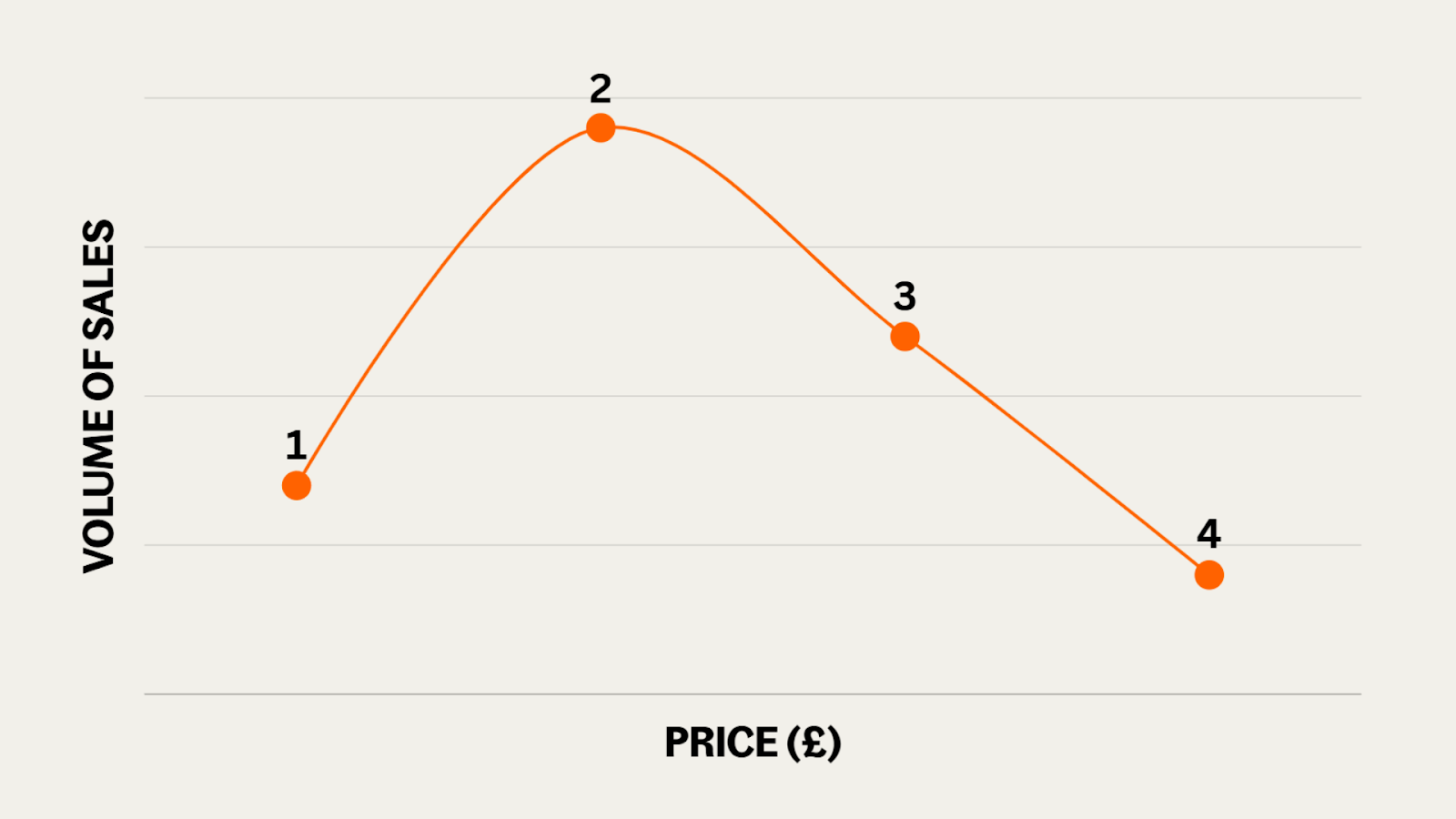
When you plot these on a graph, Point 3 is where you find the balance between profit and volume. That's your target price.
Not the cheapest. Not what competitors charge. The price where people hesitate but still convert.
If your current price is way below Point 3, you're leaving money on the table. If it's way above, you're limiting how many people will buy.
2. You're Not Tracking Break-Even ROAS Per Product
Not all products are equally profitable. Let's say you have all products in one campaign with a 350% tROAS (3.5x target). Here's what happens:
Product A (Bestseller)
35% margin, needs 3.4x ROAS to break even. You're hitting 3.5x so you’re breaking even.
Product B (Decent volume)
21% margin, needs 5.7x ROAS to break even. Running at 3.5x in the same campaign as Product A. Loses money on every sale.
Product C (Low volume)
55% margin, only needs 2.2x ROAS to break even. At 3.5x, this makes good money. But you're barely spending on it.
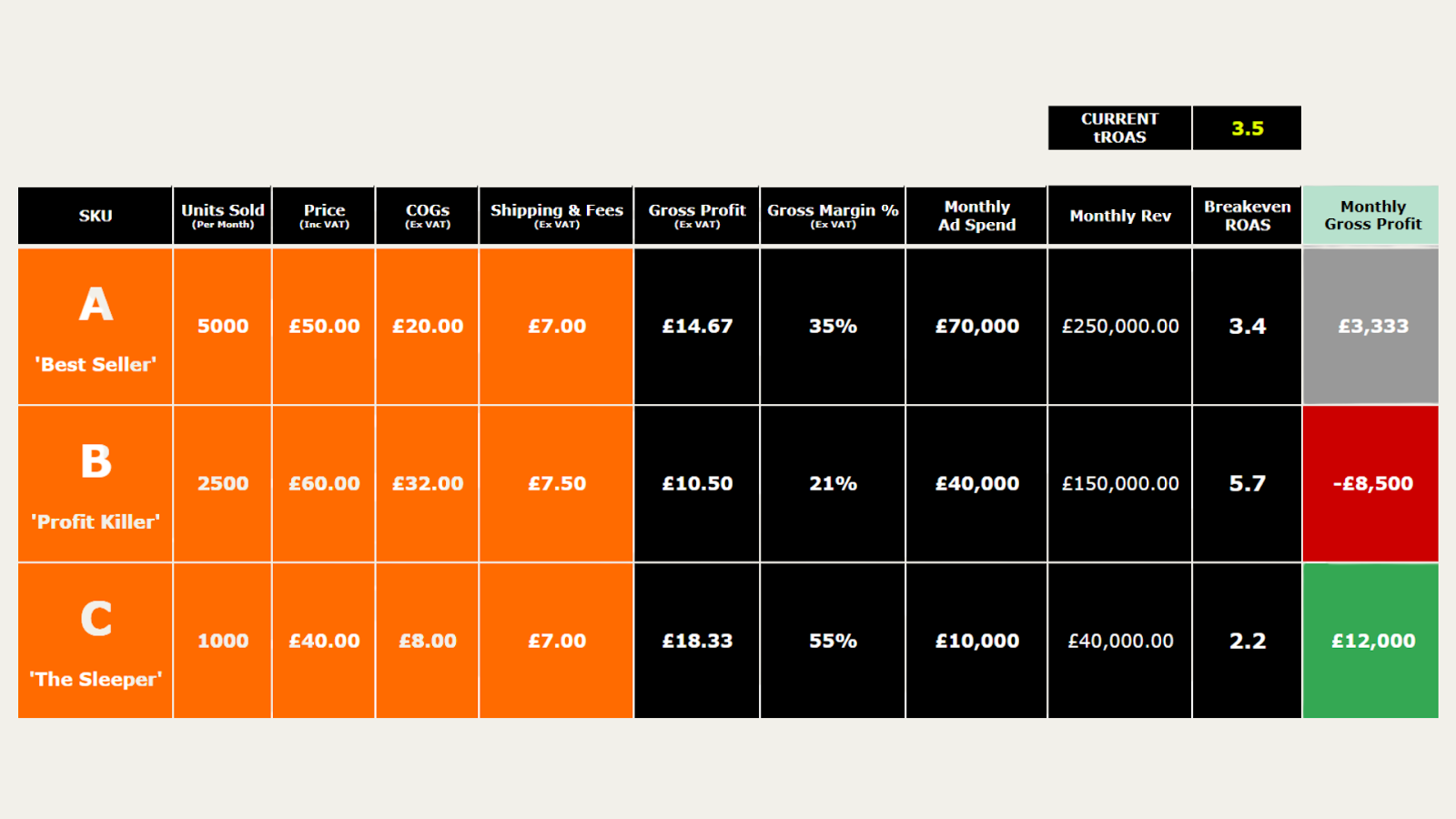
Google optimises for conversion volume, not profit. It'll happily scale Product B because it converts, even though you lose money on every sale.
Product C subsidises the other two. The blended number looks okay but scaling becomes impossible.
Here’s a real example - a brand came to us doing £600k/month via Google Ads.
Losing £40k net monthly. They were spending most of their budget on products that generated volume but not enough profit.
We reallocated to the products with the best profitability.
90 days later they were profitable. 1 Year later, we scaled to £2.6M/month with 6-Figure net profits.
Calculate your break-even ROAS for every product. COGS, shipping, fees, VAT - all of it.
Then restructure your campaigns. Don't put products needing 2x in the same campaign with products needing 6x.