Thinking
May 15, 2026
Read time:
3 Minutes


If you've ever tried to scale your Meta ads and watched the costs spike immediately, there's a good chance one of these two things is the reason.
Both are settings you can check right now in your Ads Manager.
It takes less than 5 minutes.
1. Your attribution is inflating your numbers
By default Meta uses a setting that massively over-reports your results. It claims credit for sales that would have happened anyway.
Someone scrolls right past your ad, doesn't click, buys through Google, and Meta counts it as their conversion.
So when your ROAS looks strong enough to scale, it's not actually as strong as you think.
You push more budget in and the real results don't follow.
Here's how to check:
First click to customise your columns:

Next at the bottom of the pop up, tick Incremental Attribution and also First conversion. Then hit Apply:

Then take a look at the new columns that have appeared - especially the ROAS column:
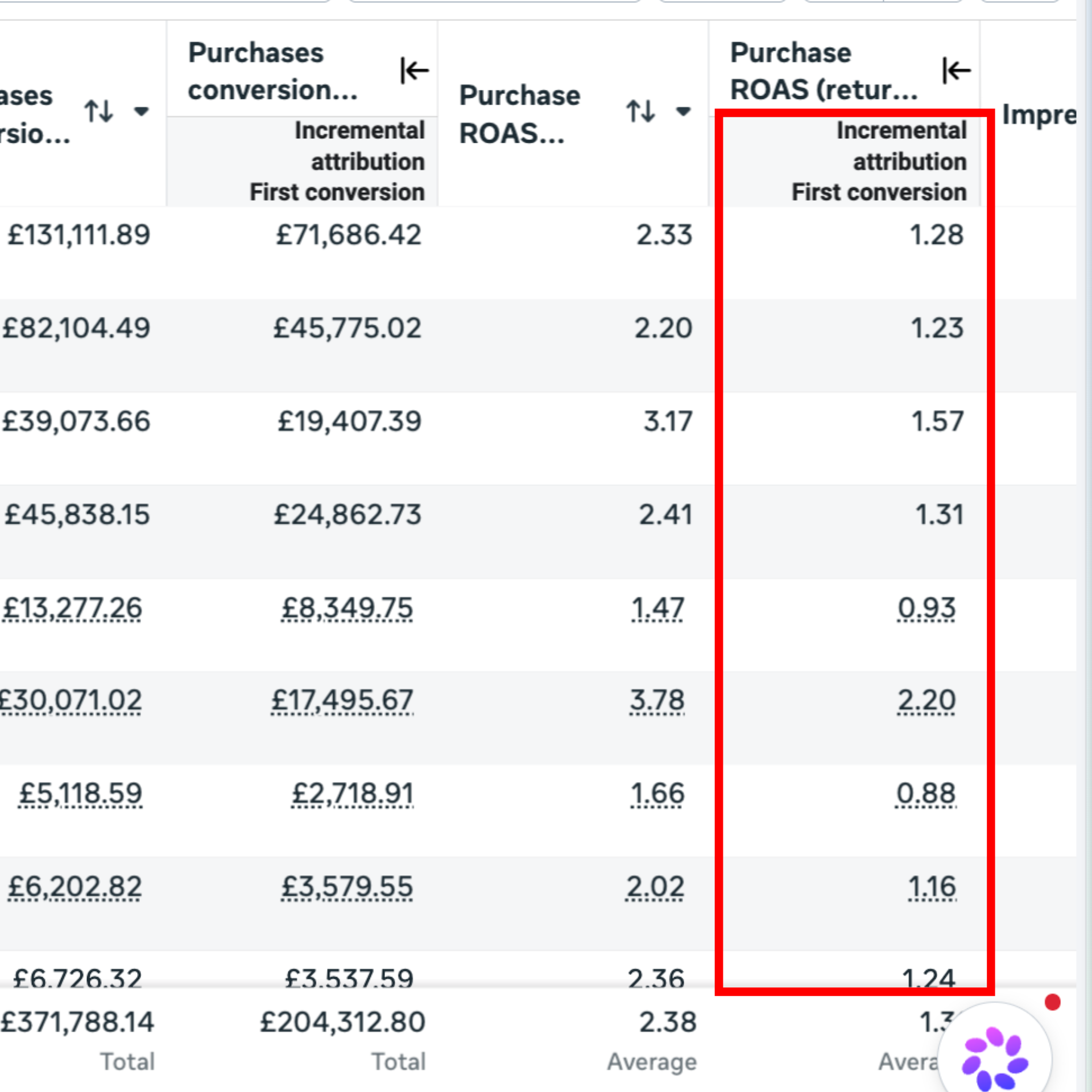
This new incremental column is a much more accurate picture of the results Meta was responsible for driving.
If the difference between your usual results column and the NEW incremental results is large, Meta is taking credit and optimising for sales it likely didn't drive.
Every scaling decision you've made based on those numbers was based on inflated data.
Instead ad sets should be set to optimise for incremental conversions as opposed to the default 7-Day-Click & 1-Day-View.
2. Your campaigns are all retargeting the same people
This one is even simpler to spot.
If you haven't set up proper audience exclusions, every single campaign in your account is free to retarget your site visitors and page engagers.
So when you increase spend you're not reaching new customers - you're just paying more to show ads to people who already know you.
Here's how to check your audience breakdown:
Go to breakdown, then scroll down to demographics - hover over this and select Audience Segments.

This will now for each campaign, ad set or even the account, breakdown where the spend is going across the different segments:
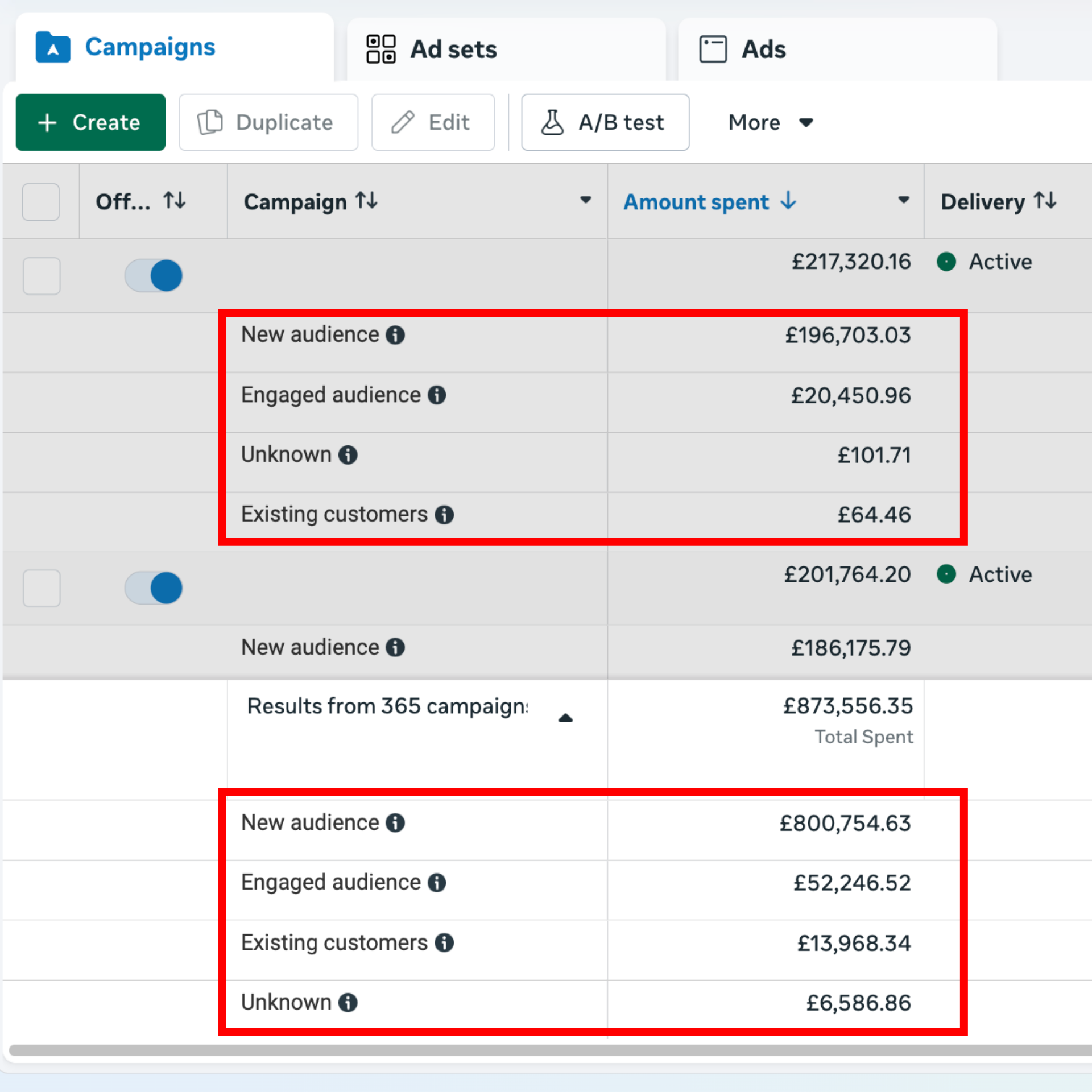
This is what a healthy split looks like but iIf the majority of your budget is going to engaged and existing audiences, you're not making the most of your ad spend.
Increasing budget will only make this worse because Meta will keep spending on the lowest hanging fruit driving up frequency and reducing reach.
By excluding existing customers and warmer audiences within your TOF ad sets you can assure that spend is going to new audiences.
Switch your attribution to Incremental so you can see what Meta is genuinely responsible for.
Set up exclusions so your prospecting campaigns are actually prospecting. Then look at the audience split and see where your spend is really going.
If you do those two things and your numbers look completely different to what you thought - that's exactly why your costs spike when you scale.