Thinking
December 5, 2025
Read time:
3 Minutes


If you are hiring a media buyer today, or reviewing the scope of your current agency, you need to look at the role through a 2026 lens.
Back in 2019, the value of a media buyer came from their ability to manually operate the controls. You hired someone to find the perfect audience interests, set up complex exclusions, and manually dictate where ads appeared.
It was a technical role, heavily focused on pulling levers inside the platform.
Today, the landscape is entirely different. The platforms have automated the vast majority of those technical tasks. The algorithms now handle targeting and placement far more efficiently than any human can.
Consequently, the value has shifted away from the "how" of the settings and moved entirely to the ‘what’ and the ‘why’ of the strategy.
To scale a brand now, you need a system that feeds the algorithm exactly what it needs to perform.
Let’s Break It Down
The brands scaling the fastest right now (and doing so profitably) focus on four specific pillars. These are the areas where human input makes the biggest financial difference.
1. A Simplified Account Structure
Years ago, we used to run complex structures with dozens of campaigns and ad sets to try and hack performance. Now, we know that consolidation is the primary driver of stability.
By simplifying the account structure, we group data together. This helps the platform’s machine learning exit the learning phase much faster.
When the system has more data in fewer places, it stabilises performance and finds your ideal customers with greater consistency. We clear away the technical clutter so the technology can do its job.
2. The Creative Feedback Loop
In this new era, the ad creative is the targeting. The image or video determines who stops scrolling. Therefore, the modern strategy revolves around a rigorous creative feedback loop.
This goes beyond just making good videos. It involves a cycle of launching ads, analysing the data to see specifically which hooks and angles caused a purchase, and then using that data to brief the next round of content. Creative should be data-backed. Every new batch of ads is built on the learnings from the previous batch, ensuring constant improvement.
3. Influencer Whitelisting
Consumer behaviour has shifted, and standard brand ads are easier than ever to ignore. To combat ‘ad blindness’ we leverage the psychology of trust through influencer whitelisting.
This involves running advertising through a creator’s personal handle rather than the brand’s profile. When a user sees a post from a person, they are far more likely to engage than when they see a logo. It feels like a genuine recommendation.
This method allows us to reach new audiences who might otherwise scroll past a traditional corporate ad.
4. Profit Analysis & Understanding
Finally, we look strictly at the real numbers. Platform ROAS (Return on Ad Spend) is often just a vanity metric. True growth comes from understanding the full economic picture of the business.
We calculate targets based on the Cost of Goods Sold (COGS), shipping fees, returns rates, and ALL other business costs. By aligning our advertising targets with your actual Profit and Loss statement, we ensure that every pound of spend contributes to money in the bank.
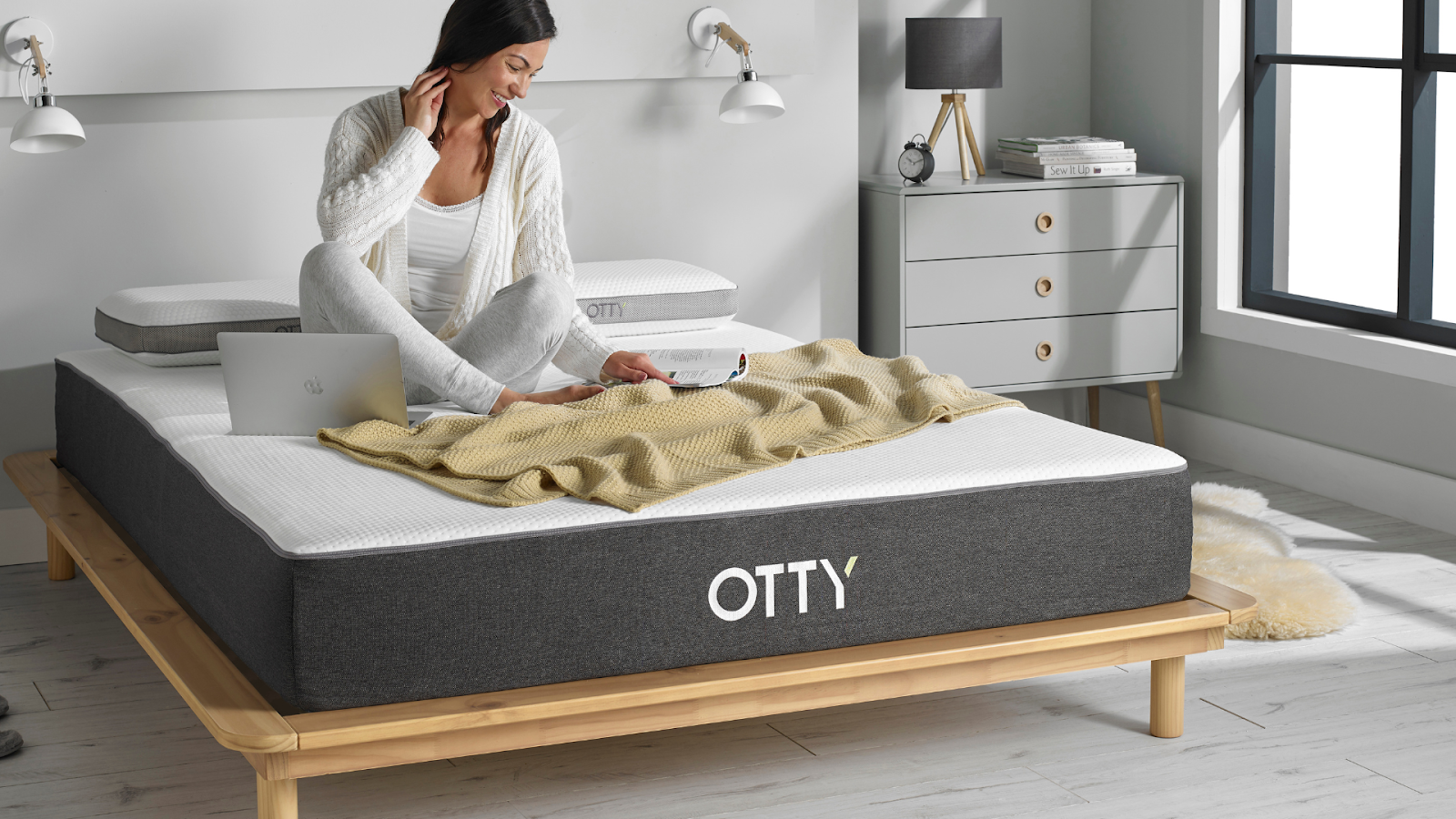
We believe in this logic because we see it work repeatedly. We applied this exact methodology to OTTY Sleep.
By moving away from technical setups to focusing heavily on account consolidation and our creative feedback loop, the results were transformative.
We successfully scaled the brand to over 7 figures per month.
Even more impressively, we achieved this volume while improving efficiency, reducing their New Customer Acquisition Cost (nCAC) by 49%.
The Bottom Line
The era of the usual ‘Media Buyer’ is over.
Success in 2026 comes from looking at the bigger picture.
It requires a move away from micro-managing settings and towards macro-managing strategy, creative, and unit economics. When you get the creative system and the financial logic right, the platform automation becomes a powerful engine for scale.