Thinking
December 12, 2025
Read time:
3 Minutes
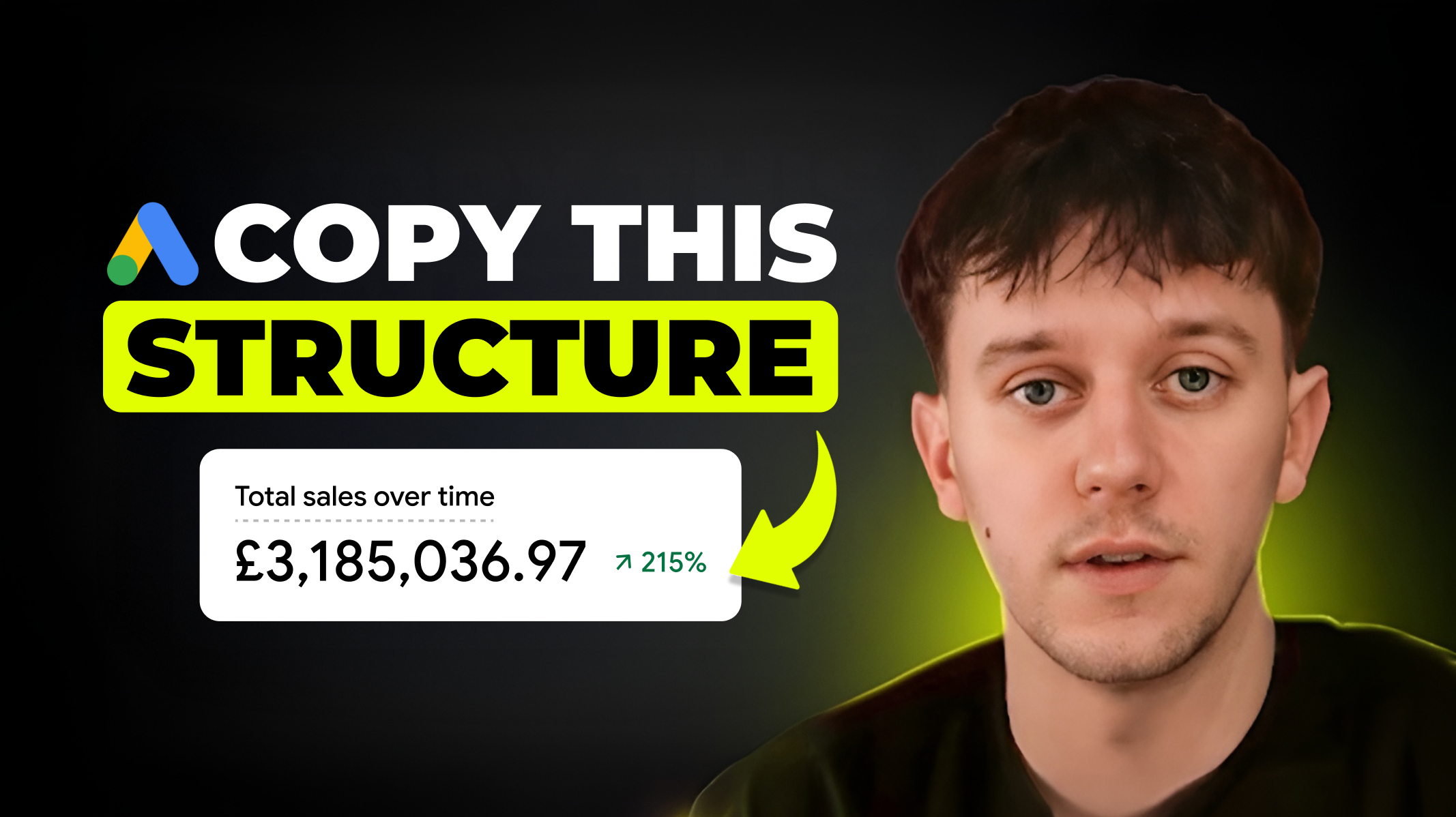

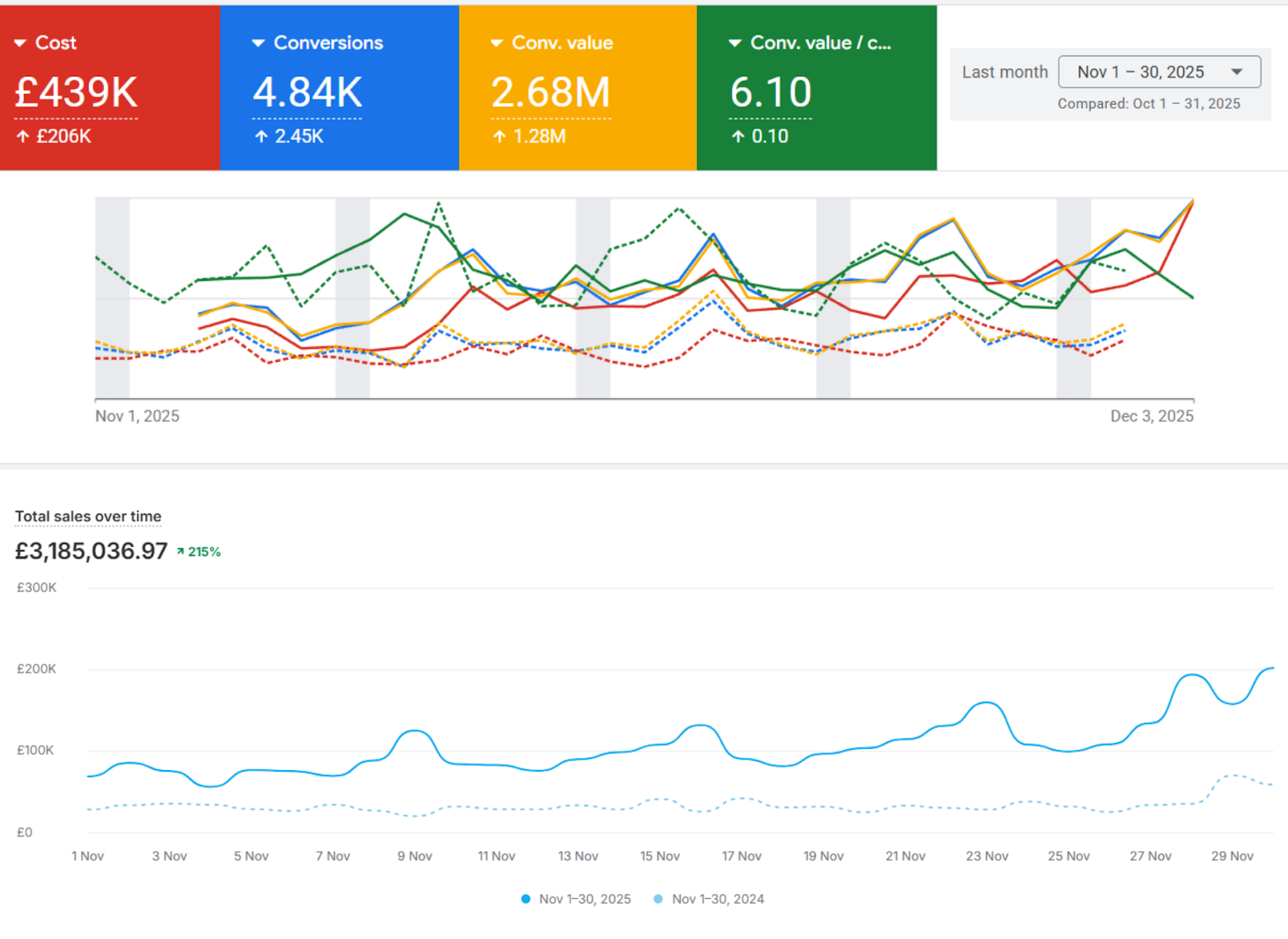
One of our brands in the furniture space just crossed £3M in backend revenue. We grew 215% year over year while MER held strong at 5.8x.
Upping your ad spend is simple, but scaling profitably is the hard part.
Here's how we structured the Google Ads account to do both.
Watch the full breakdown in our latest Youtube video or keep reading below.
Why most Google Ads accounts lose efficiency as they grow
The typical setup has too many campaigns, no clear product hierarchy, and ROAS targets that either choke growth or tank ROAS.
We fix this with two things - a simplified campaign structure and a product segmentation system that tells the algorithm exactly where to focus.
The Search Structure (3 campaigns, that's it)
Most accounts overcomplicate search. We run three campaigns:
Brand Defence - Captures people already searching for you. We cap this at 5-15% of budget because it's not driving new growth, it's protecting existing demand.
Generic Prospecting - Broad category terms like "double bed" or "king size mattress." This is where you find new customers who don't know you yet.
High-Performance Exact - We pull the best converting search terms from Shopping and PMax data, then isolate them as exact match keywords. These are proven winners, so we want maximum impression share on them.
The key with search is Quality Score. Google rewards relevance - the more tightly your ad copy matches the search term, the less you pay per click and the higher you rank. So we structure ad groups around tight keyword themes, then write ads that speak directly to that intent. Someone searching "king size mattress" should see an ad about king size mattresses, not a generic "shop our beds" message.
All the granularity happens at ad group level. Three campaigns keeps budget control simple.
The Shopping Setup (Heroes, Villains, Zombies)
This is where most brands leave money on the table.
Not all products deserve an equal budget. We segment the entire catalogue into three buckets based on 90-day performance data:
Heroes - Your top performers. High volume, strong margins, proven converters. These get dedicated ad groups with priority budget.
Villains - Products that spend but don't deliver. Maybe lower margins, maybe weaker conversion rates. We don't cut them - we just set required ROAS 10% higher so they have to earn their spend.
Zombies - Products with barely any impressions. The algorithm has ignored them. We move these into a separate campaign to force testing. Often a Zombie may well become a Hero, it just never had a chance.
We refresh these buckets every 30 days based on the last 90 days performance. Products move between tiers based on what the data says.
The PMax Layer
On top of Standard Shopping, we run one Performance Max campaign as a "Catch All."
Key settings - feed only (no creative assets), brand terms excluded, entire catalogue included.
This drives 35-40% of total spend and focuses purely on new customer acquisition. Because it contains all products, it acts as a safety net - catching any demand the segmented Shopping campaigns might miss while giving the algorithm room to find opportunities we haven't spotted yet.
How we grew without killing MER
Here's the part most people get wrong - they hit a good ROAS and immediately increase the budget. The algorithm panics, ROAS drops, they panic and cut the budget. The cycle repeats.
We do it differently.
Instead of increasing budget first, we increase the required ROAS target gradually:
- Month 0 - Set a moderate baseline. Say, 420%
- Month 1 - Increase target to 440%
- Month 2 - Increase to 480%
Each increase forces the algorithm to find higher-quality traffic. It gets smarter about who it shows ads to. Once performance stabilises at the new target, then we increase budget.
It's slower but it's also why we're at £3M with a 5.8x MER instead of 2.5x
The Bottom Line
Most Google Ads accounts struggle to grow profitably because they lack structure with too many campaigns, no product hierarchy, and budget increases that outpace ROAS targets.
The fix is a simplified search setup built around Quality Score, a segmentation system that prioritises your best products while testing your worst, and the patience to raise ROAS targets before raising budgets.
- Simple structure
- Keyword rich ads
- Clear product hierarchy
- Patience on budget increases / tROAS adjustments
Work With Us
We work with ecommerce brands who want PROFITABLE growth and not just more revenue.
If you want to see how your current setup compares to what we've outlined here, book a free growth audit and we'll break down exactly where the opportunities are for you brand.